
The Anonymous Visitor Problem Is Bigger Than You Think
Right now, someone from your ideal customer profile is on your website. They're reading your pricing page, comparing your features to a competitor, maybe watching a demo video. And when they close the tab, they'll disappear completely—no name, no email, no way to follow up.
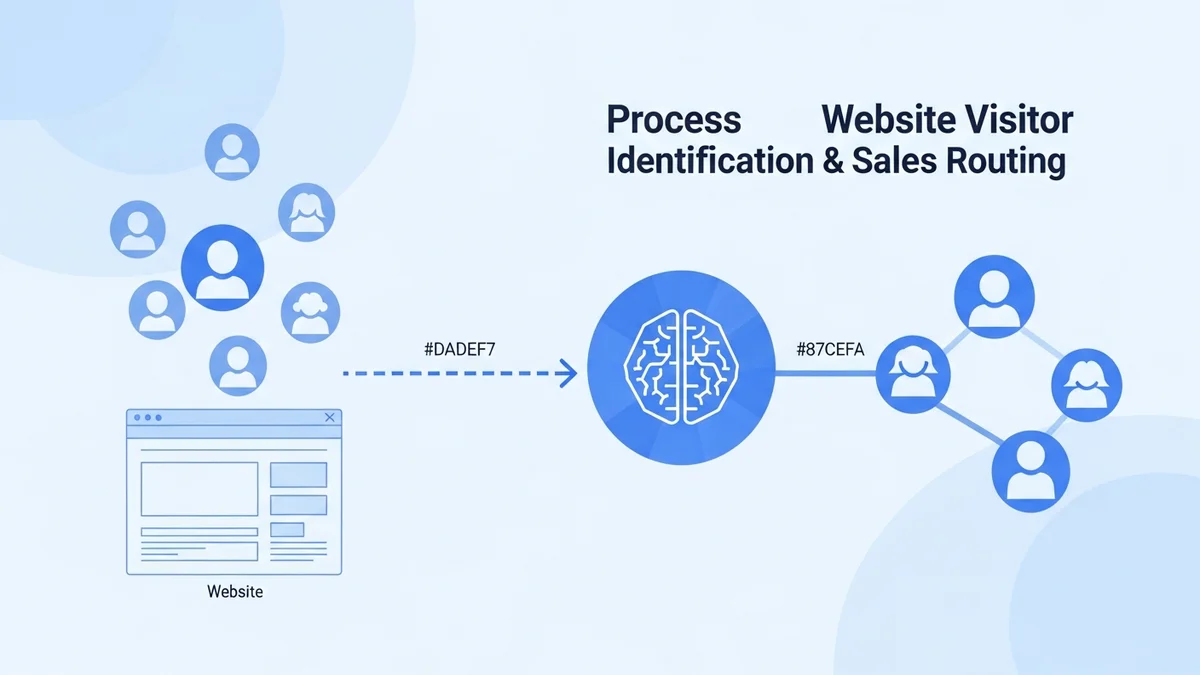
This isn't a rare edge case. It's 97–98% of your traffic. According to data from multiple visitor identification platforms, only 2–3% of B2B website visitors ever fill out a form. The other 97% represent what's commonly called the "hidden pipeline"—real buyers with real intent who your marketing stack can't see.
For B2B companies running paid campaigns, this stings even more. When you're paying $6+ per click on LinkedIn (a common benchmark for B2B), having 97 out of every 100 visitors vanish anonymously isn't just a missed opportunity—it's a serious return-on-investment problem.
Website visitor identification technology exists specifically to close this gap. But not all approaches work equally well, and the wrong tool for your use case will leave most of that hidden pipeline untouched. This guide breaks down how the technology works, where it falls short, and how to actually use the data it surfaces.
Why Visitors Stay Anonymous (And Why That's Getting Harder to Fix)
Understanding the root causes of visitor anonymity matters before you invest in any solution. There are three distinct layers to the problem.
The Form Friction Problem
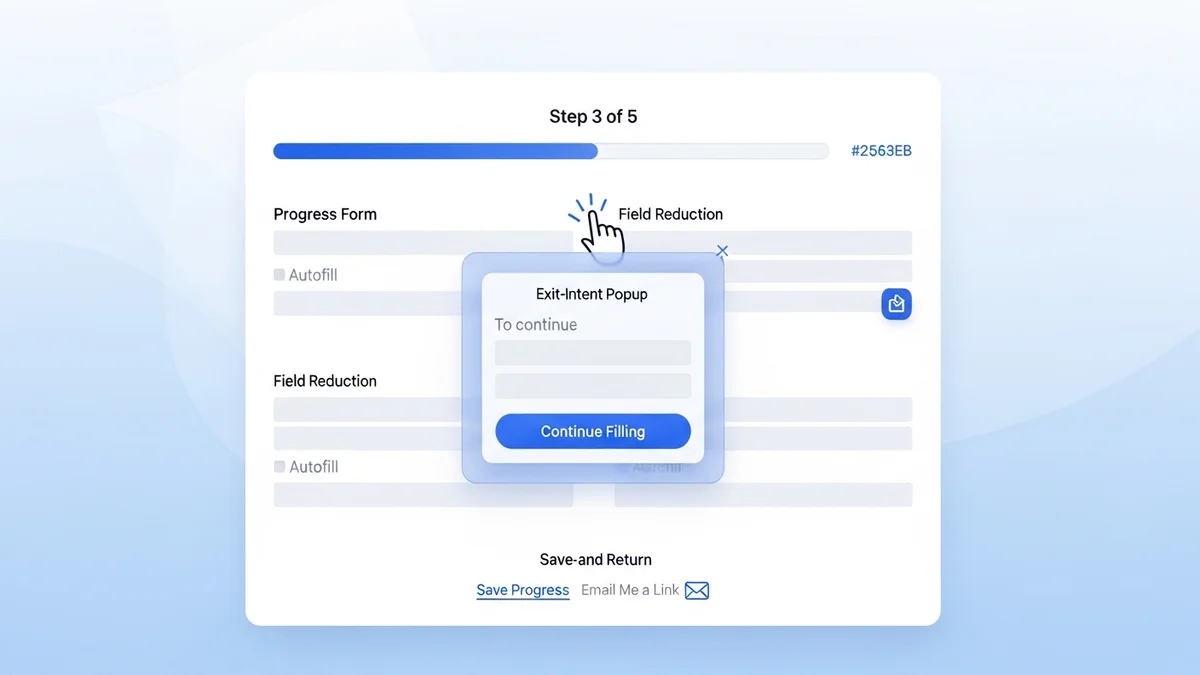
Traditional lead capture depends on forms. But forms create commitment anxiety at exactly the wrong moment in the buyer journey. Visitors in early research mode—comparing options, validating pricing, reading case studies—aren't ready to talk to sales. Filling out a form feels like signing up for a follow-up they don't want yet.
| Reason Visitors Skip Forms | Impact on Conversion |
|---|---|
| Too many fields (over 3) | ~50% abandonment per additional field |
| Early research phase | Not ready to engage with sales |
| Privacy concerns | 79% of Americans worry about how companies use their data (Pew Research) |
| Commitment anxiety | Forms feel like opting into spam |
| "I'll come back later" | ~98% never return |
Tools like OptinMonster and Leadpages help optimize form conversion rates through smart targeting and reduced friction—but even the best-optimized form strategy still leaves the vast majority of visitors unidentified. Visitor identification isn't a replacement for strong lead capture; it's what fills the gap.
The Remote Work Problem
Traditional visitor identification tools rely heavily on IP address matching. The logic is straightforward: if a visitor's IP resolves to Salesforce's corporate network, you know someone at Salesforce visited. This works reasonably well for office-based traffic.
The problem is that B2B buying behavior has fundamentally shifted. A significant portion of website traffic now comes from home offices, coffee shops, and personal devices—all of which use residential IP addresses that don't map to company networks. Standard IP-based tools are essentially blind to this traffic, which means they're missing a substantial share of your actual buyer audience.
The Privacy Technology Problem
Privacy-conscious browsers, VPNs, ad blockers, and cookie-blocking extensions have all made traditional tracking harder. A Pew Research study found 79% of Americans are concerned about how companies use their personal data—and that concern translates directly into behavior that reduces tracking effectiveness.
This is why modern visitor identification platforms have moved beyond simple cookie tracking toward multi-signal approaches that work even when standard tracking is blocked.
How Visitor Identification Technology Actually Works
There are several distinct methods for identifying anonymous visitors. Most serious platforms combine multiple approaches to maximize match rates.
IP-Based Identification
The oldest and most common method. Every device connecting to your website sends an IP address, which can be cross-referenced against databases of corporate IP ranges to identify the organization. This is the core technology behind company-level tools like Leadfeeder.
IP identification is effective for office-based visitors and gives you useful firmographic data—company name, industry, size, location. The limitations are real though: it doesn't tell you which person visited, it misses remote workers entirely, and it can't identify visitors on residential connections.
Browser Fingerprinting
Browser fingerprinting creates a unique identifier based on a combination of signals: browser type and version, installed plugins, screen resolution, timezone, font rendering, and dozens of other characteristics. The resulting "fingerprint" is statistically unique enough to identify returning visitors with up to 90% accuracy, according to research cited by multiple identification platforms.
Newsletter
Get the latest SaaS reviews in your inbox
By subscribing, you agree to receive email updates. Unsubscribe any time. Privacy policy.
Critically, fingerprinting works even when cookies are disabled—making it more robust than traditional tracking in an increasingly privacy-conscious environment.
Identity Graph Matching
This is where person-level identification happens, and it's what separates more sophisticated platforms from basic company-level tools. Identity graph matching cross-references behavioral signals from your site against large proprietary databases of known professional identities—essentially matching anonymous visitor behavior to real people based on patterns across millions of touchpoints.
Platforms using identity graph technology can surface actual names, job titles, email addresses, and LinkedIn profiles for individual visitors. Tools like Clearbit / HubSpot Breeze Intelligence and ZoomInfo operate large identity databases that power this kind of person-level resolution.
Cookie-Based Behavioral Tracking
First-party cookies remain a foundational layer for tracking visitor behavior across sessions—pages visited, time spent, content consumed, and return visits. While third-party cookies have been significantly curtailed, first-party tracking remains effective and privacy-compliant when implemented correctly. This data feeds intent scoring models that help prioritize which identified visitors are most worth pursuing.
Company-Level vs. Person-Level Identification: Why It Matters
This distinction is the most important factor when evaluating visitor identification tools, and it's one that vendors don't always make obvious.
Company-level identification tells you Acme Corp visited your pricing page three times this week. That's interesting, but it immediately raises more questions than it answers: Which person at Acme? A decision-maker or an intern? Were they comparing your solution seriously, or doing competitive research for a different project?
Company-level data alone creates prioritization paralysis. Your sales team can't act on "someone at Acme visited" without significant additional research—and that research is expensive in time and attention.
Person-level identification tells you that Sarah Chen, VP of Marketing at Acme Corp, visited your pricing page three times this week and also read two case studies. Now your sales team has actionable intelligence: a specific person, a known role, and behavioral signals that indicate serious evaluation.
| Capability | Company-Level Tools | Person-Level Tools |
|---|---|---|
| Identifies the organization | Yes | Yes |
| Identifies the individual | No | Yes (varies by match rate) |
| Works for remote/home office visitors | No (IP-only) | Yes (identity graph) |
| Actionable for sales outreach | Requires additional research | Direct outreach possible |
| Useful for ad retargeting | Account-level targeting only | Individual-level targeting |
| Typical match rate | 20–40% of traffic | 20–40% of identified visitors |
The trade-off is that person-level identification raises more significant privacy and compliance questions. More on that below.
Turning Visitor Data Into Pipeline: The Practical Playbook
Identifying visitors is only half the equation. The data is only valuable if it changes how you market and sell. Here are the three highest-leverage use cases.
Sales Prioritization
The most immediate application is giving your sales team a prioritized list of accounts showing active buying intent. Instead of cold outreach based on static ICP criteria, reps can focus on companies—or individuals—who are actively researching your solution right now.
This fundamentally changes the outreach conversation. "I noticed you've been looking at our pricing" (when used carefully and ethically) opens very differently than a generic cold email. More importantly, it lets reps time their outreach to match where prospects actually are in their evaluation process.
Platforms like Apollo.io combine large B2B contact databases with intent signals, allowing teams to enrich visitor identification data with contact information and sequencing capabilities in one workflow.
LinkedIn Retargeting
For B2B companies, LinkedIn retargeting is one of the highest-ROI applications of visitor identification data. When you know which companies (or individuals) visited high-intent pages like pricing or comparison pages, you can build targeted LinkedIn audiences specifically for those accounts.
This turns expensive LinkedIn CPCs into a more efficient remarketing play. Instead of showing ads to everyone who visited your site, you can prioritize budget toward visitors who demonstrated specific high-intent behaviors—multiple visits, pricing page views, case study engagement.
Personalized Content and Nurture
Visitor identification data enables smarter marketing automation. When you know a visitor is from a 500-person SaaS company versus a 50-person agency, you can dynamically serve different content, case studies, and messaging that's more relevant to their context—even before they've identified themselves.
Tools like HubSpot Marketing Hub can ingest visitor identification data to trigger personalized email sequences, adjust content recommendations, and score leads more accurately—all based on anonymous behavioral signals that would otherwise be invisible.
Legal Compliance and Privacy: What You Need to Know
Visitor identification operates in legally complex territory. The rules differ significantly based on where your visitors are located and what you do with the data.
GDPR and European Visitors
Under GDPR, collecting and processing personal data about identifiable individuals without a lawful basis is illegal. For visitor identification, this creates real constraints: person-level identification of EU visitors typically requires either explicit consent or a legitimate interest assessment—and "we want to sell to them" doesn't qualify as legitimate interest.
The practical implication is that most person-level identification tools either exclude EU traffic entirely, operate at the company level only for EU visitors, or require a consent framework to be in place. Understand exactly what your chosen tool does with EU traffic before deploying it.
CCPA and US Visitors
California's CCPA gives residents the right to know what personal data is collected about them and to opt out of the sale of that data. Visitor identification data constitutes personal information under CCPA. You need a clear privacy policy disclosing the practice and a functional opt-out mechanism.
Practical Compliance Steps
- Update your privacy policy to disclose visitor identification technology and what data is collected
- Implement a functional opt-out mechanism (most enterprise tools provide this)
- Store identified visitor data securely with appropriate access controls
- Don't combine visitor identification data with sensitive categories (health, financial status, etc.)
- Audit your tool's data retention policies—how long does identified visitor data persist?
The compliance burden is real but manageable. The companies that get into trouble are typically those that deploy visitor identification without updating their privacy disclosures or implementing opt-outs—not those using the technology thoughtfully.
Choosing the Right Visitor Identification Tool
The market for visitor identification tools ranges from simple company-level trackers to sophisticated platforms with person-level resolution, CRM integration, and AI-powered intent scoring. The right choice depends on your use case, traffic volume, and what you actually plan to do with the data.
For teams primarily focused on account-based marketing and knowing which companies are showing interest, company-level tools provide solid ROI at lower cost and complexity. Leadfeeder is a well-regarded option in this category with strong CRM integrations.
For teams that want person-level resolution and direct sales outreach capability, look for platforms built on large identity graphs with demonstrated match rates. Cognism is worth evaluating here—their data coverage is particularly strong in European markets where other tools struggle with GDPR constraints.
For teams already invested in HubSpot's ecosystem, Clearbit / HubSpot Breeze Intelligence offers native integration that enriches contact and company records automatically as visitors are identified, reducing the friction of getting data into the workflows where sales and marketing actually operate.
Regardless of which tool you choose, prioritize these evaluation criteria: match rate on your specific traffic (ask for a proof-of-concept on real data, not vendor-provided benchmarks), how the tool handles remote worker traffic, GDPR/CCPA compliance posture, and how cleanly the data integrates with your CRM and marketing automation stack.
The technology to see your hidden pipeline exists. The 97% of visitors who leave without filling out a form aren't lost—they're identifiable, prioritizable, and reachable. The gap between companies that act on this data and those that don't is increasingly a meaningful competitive advantage in B2B marketing.