
Why ZoomInfo Pricing Is a Black Box
ZoomInfo is one of the few major B2B data platforms that refuses to publish pricing on its website. Every plan requires a sales call, a demo, and a custom quote. This is deliberate — it allows ZoomInfo to price-discriminate based on company size, use case, and how badly you need the data.
The result is a market where buyers have almost no leverage. You can't comparison-shop without investing hours in sales calls with multiple vendors. This guide fixes that. Based on verified customer quotes, G2 reviews, and Vendr transaction data from 2025-2026, here's what ZoomInfo actually costs.
ZoomInfo's Three Pricing Tiers
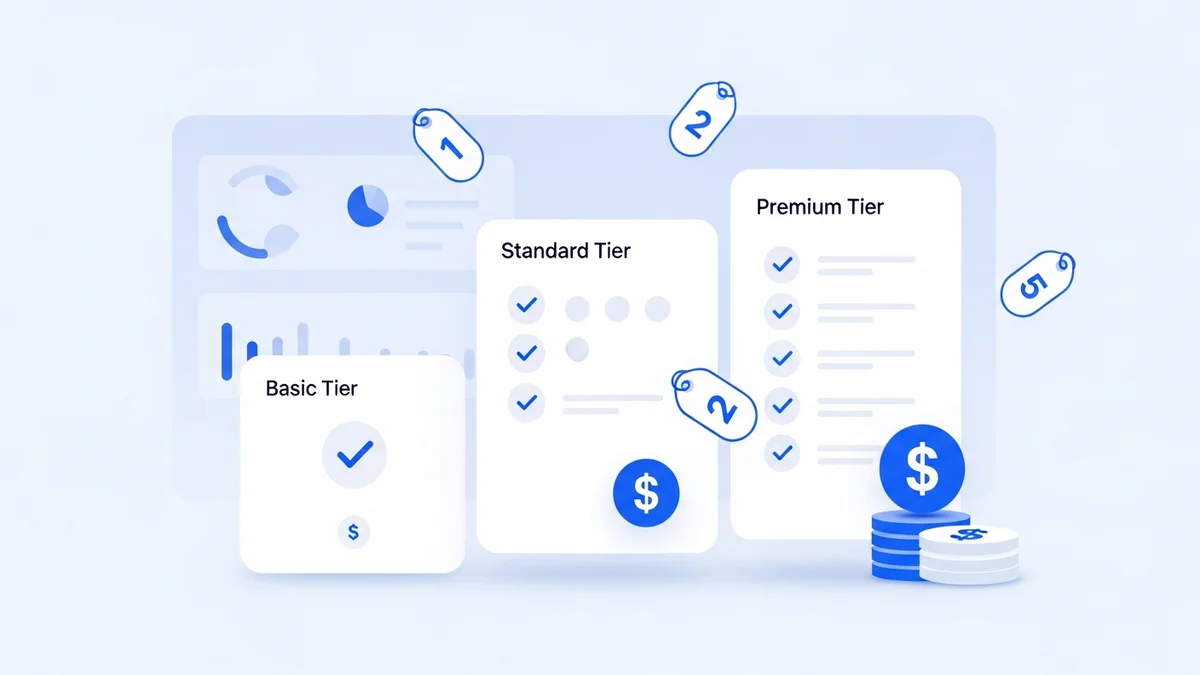
ZoomInfo offers three core plans. All require annual commitments — there is no monthly billing option. Pricing below reflects typical first-year quotes for small-to-midsize teams.
Professional — Starting at ~$14,995/year
The entry point for most teams. Professional includes:
- Contact and company search with basic filters (industry, size, location, title)
- Direct dial phone numbers and verified email addresses
- Chrome extension for LinkedIn prospecting
- Basic CRM integrations (Salesforce, HubSpot)
- 5,000 bulk export credits/year — this is often the first limit teams hit
Typically includes 2-3 seats. Additional seats run $1,500-$3,000/year each depending on your negotiation.
Advanced — Starting at ~$24,995/year
The most popular tier for scaling sales teams. Adds:
- Buyer intent data powered by Bombora — shows which companies are actively researching solutions in your category
- Company org charts with reporting relationships mapped
- Advanced workflow automation for lead routing and enrichment
- Website visitor identification (company-level, not individual)
- 10,000 bulk export credits/year
Intent data is the key differentiator here. Teams using ZoomInfo intent signals report 30-40% higher connect rates on outbound sequences compared to cold outreach, because they're contacting accounts that are already in-market.
Elite — Starting at ~$39,995/year
Enterprise tier with everything in Advanced plus:
- Real-time streaming intent — more granular than Advanced's standard intent
- Data enrichment API for custom integrations and automated workflows
- Custom audience builder for ABM ad campaigns
- Dedicated customer success manager
- 20,000+ bulk export credits/year
Elite is typically sold to teams of 10+ reps at companies with $10M+ ARR. The API access alone justifies the premium for teams building custom data pipelines.
The Hidden Costs Nobody Mentions
The sticker price is just the beginning. ZoomInfo's actual cost-of-ownership is significantly higher due to several factors that don't show up in the initial quote:
- Annual-only contracts: No monthly option means you're locked in for 12 months minimum. Early termination fees apply.
- Per-seat pricing compounds fast: A 10-person sales team on Advanced could easily hit $40,000-$60,000/year
- Export credit limits: Professional's 5,000 credits sounds generous until you realize a single list-building session can burn 200-500 credits. Heavy users hit the wall by Q3.
- Auto-renewal with price increases: ZoomInfo contracts typically auto-renew with 5-10% annual increases. You must notify 60-90 days before renewal to negotiate or cancel.
- Onboarding and training: While "included," the quality varies. Complex CRM integrations often require professional services ($5,000-$15,000).
- Data accuracy maintenance: ZoomInfo data degrades over time as contacts change roles. Continuous verification requires ongoing credit usage.
Newsletter
Get the latest SaaS reviews in your inbox
By subscribing, you agree to receive email updates. Unsubscribe any time. Privacy policy.
ZoomInfo vs the Competition: Price-Performance Analysis
ZoomInfo's premium pricing makes sense for some teams but is overkill for others. Here's how it compares to the main alternatives on a cost-per-value basis:
| Platform | Starting Price | Free Plan | Database Size | Best For |
|---|---|---|---|---|
| ZoomInfo | ~$14,995/yr | No | 321M+ profiles | Enterprise teams, intent data |
| Apollo.io | $49/user/mo | Yes | 275M+ contacts | SMBs, all-in-one prospecting |
| Cognism | Custom | No | 400M+ profiles | European markets, GDPR compliance |
| Lusha | $36/user/mo | Yes (5/mo) | 150M+ contacts | Individual reps, quick lookups |
| Lead411 | $99/user/mo | Trial | 450M+ contacts | SMBs wanting intent data |
The math is stark: a 5-person team on Apollo.io Basic pays ~$2,940/year. The same team on ZoomInfo Professional pays ~$22,000/year — roughly 7.5x more. Apollo's data is less comprehensive, but for most outbound use cases the accuracy gap has narrowed significantly since 2024.
When ZoomInfo Is Worth the Premium
Despite the high cost, ZoomInfo earns its premium in specific scenarios:
- Enterprise selling: If you're targeting Fortune 1000 companies and need org charts, technographic data, and buying committee mapping, ZoomInfo's depth is unmatched
- Intent-driven outbound: The Advanced tier's Bombora intent data genuinely identifies in-market accounts. If your average deal size is $50K+, even one extra closed deal per quarter justifies the cost
- Data enrichment at scale: The Elite tier's API enables automated lead scoring and routing that smaller platforms can't match
- Compliance-heavy industries: ZoomInfo's verification processes and data provenance documentation matter in regulated sectors
When You Should Choose an Alternative
ZoomInfo is the wrong choice if:
- Your ACV is under $10K — the ROI math doesn't work. Use Apollo.io or Lusha instead.
- You're a team of 1-3 reps — you'll never use enough of the platform to justify the minimum spend
- You primarily sell to SMBs — ZoomInfo's data advantage is strongest on enterprise accounts. SMB coverage is comparable to cheaper alternatives.
- You need European data — Cognism has better EMEA coverage and is GDPR-first by design
Negotiation Tips That Actually Work
- Get competing quotes first: ZoomInfo sales reps have significant discount authority, but only exercise it when they know you're evaluating Apollo, Cognism, or Lusha. Get written quotes from at least two competitors before your ZoomInfo call.
- Push for multi-year discount: 2-year commitments typically unlock 15-25% off annual pricing
- Negotiate credit limits separately: Export credits are often the first thing that can be increased without changing the headline price
- Ask about startup programs: ZoomInfo offers reduced pricing for companies under $5M ARR — but only if you ask
- Time your purchase: End of quarter (March, June, September, December) is when sales reps are most flexible on pricing
Conclusion
ZoomInfo is the most comprehensive B2B data platform available in 2026, and also the most expensive. Starting at ~$14,995/year with realistic all-in costs often reaching $25,000-$60,000+ for mid-size teams, it's an investment that only makes sense for organizations where the data depth directly drives revenue. For most SMBs and early-stage teams, alternatives like Apollo.io deliver 80% of the value at 20% of the cost. But if you're running an enterprise sales motion with $50K+ ACVs and need intent data to prioritize accounts — ZoomInfo remains the benchmark.