The State of B2B Lead Generation in 2026: What's Working and What Isn't
Here's the uncomfortable truth that most B2B marketing teams haven't fully reckoned with: the average company converts just 2% of its website visitors into leads. The other 98% leave without a trace. For years, the industry's answer to this problem was more traffic — more ad spend, more content, more cold outreach. In 2026, the playbook has finally changed.
This guide breaks down the most significant B2B lead generation trends shaping strategy right now, grounded in real survey data from 244 B2B marketers surveyed at B2B Marketing Live in London and analysis from leading intent data platforms. If you're still running the same lead gen motions you were running in 2023, you're leaving serious pipeline on the table.
The 98% Problem: Why Traditional Lead Gen Is Structurally Broken
The fundamental flaw in traditional B2B lead generation is the assumption that buyers will announce themselves when they're ready. They don't. According to Gartner research cited by intent platforms, 83% of B2B buyers only contact sales after completing roughly 70% of their research independently. That means by the time a prospect fills out your demo request form, they've already visited your pricing page, compared you against three competitors, and read your customer case studies — all without you knowing.
The contact form model was never designed to capture this behavior. It captures the 2% who are ready to commit. The remaining 98% — the ones in active research mode, the ones who are highly qualified but not yet ready to raise their hand — disappear entirely. This is the core structural problem that the most important 2026 trends are designed to solve.
The solution isn't a better form. It's a fundamentally different approach to identifying and engaging buyers earlier in their journey, using intent signals rather than explicit declarations of interest.
Trend 1: Website Visitor Identification Is Now Table Stakes
The most consequential shift in B2B lead generation right now is the mainstream adoption of website visitor identification — technology that reveals which companies are browsing your site, even when they never fill out a form. Until recently, this category was niche. In 2026, it's becoming foundational infrastructure for serious B2B marketing teams.
How It Actually Works
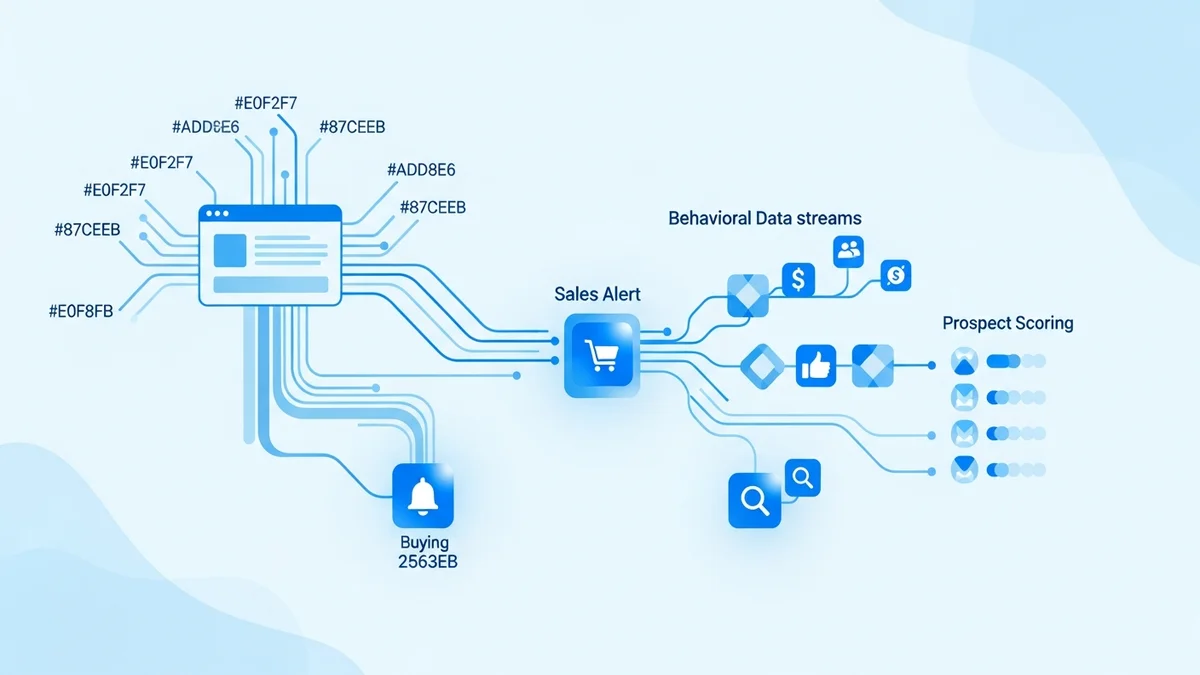
Visitor identification platforms match IP addresses and device signals against business databases to surface company-level data: organization name, industry, employee count, which pages were viewed, and how long was spent on each. When a logistics company from Birmingham visits your product comparison page three times in a week, the platform surfaces that signal in real time — along with enriched contact data — and routes it to your CRM or Slack before the prospect has any idea you know they exist.
Tools like Leadfeeder have been building this capability for years, and the category has matured significantly. The data enrichment layer — layering firmographic context on top of visit behavior — is what separates useful intent signals from noise. A visit from an unknown SMB means something very different from a visit from an enterprise prospect that matches your ICP exactly.
Why First-Party Data Now Beats Everything Else
The deprecation of third-party cookies has accelerated a shift that was already underway. Your own website visit data — who came, when, what they looked at — is now among your most defensible competitive assets. Third-party data providers face increasing regulatory pressure and signal degradation. Your first-party behavioral data doesn't.
Platforms like Clearbit / HubSpot Breeze Intelligence have responded by building enrichment layers directly on top of first-party CRM and website data, reducing dependence on third-party cookie pools. The practical output: you can run cookieless retargeting campaigns on LinkedIn and Google Ads using your own enriched visitor segments, maintaining personalization even as traditional tracking degrades.
Trend 2: AI-Driven Hyperpersonalization at Scale
Personalization has been a buzzword in B2B marketing for at least a decade, but execution has always lagged the ambition. Most teams managed segments, not true 1:1 personalization. In 2026, AI has genuinely changed the cost curve on this — making individualized outreach economically viable at scale for the first time.
From Segments to Individual Signals
The shift is from "companies in the manufacturing sector get version B of our email sequence" to "this specific company, having visited our integrations page twice and your pricing page once, receives messaging that leads with integration depth and total cost of ownership." That level of contextual specificity was previously only achievable with significant manual effort per prospect. AI orchestration layers have compressed that effort dramatically.
The most effective implementations combine visitor identification data with CRM history and behavioral triggers to fire automated nurture flows. The key insight is that personalization only feels personal when it references actual behavior — not inferred firmographic proxies. Referencing that a prospect looked at your enterprise pricing page is far more powerful than referencing that they're a mid-market SaaS company.
Newsletter
Get the latest SaaS reviews in your inbox
By subscribing, you agree to receive email updates. Unsubscribe any time. Privacy policy.
Tools Enabling This Shift
On the data side, platforms like Apollo.io and ZoomInfo have embedded AI layers into their prospecting workflows, using intent signals to surface not just who to contact but when and with what angle. The timing signal is underrated — reaching a prospect during an active research window produces dramatically different response rates than cold outreach with no behavioral context. Cognism has similarly built intent overlays into its contact database, letting teams filter prospecting lists by companies showing active in-market behavior.
Trend 3: Channel Mix Is Shifting — The Data Tells a Clear Story
The 2026 B2B Lead Generation Report, drawing on 244 marketers surveyed at B2B Marketing Live in London, provides the clearest picture yet of how channel adoption is evolving. Some findings confirm conventional wisdom; others are more surprising.
The Channel Data
| Channel | 2025 Adoption | 2026 Trend | Key Signal |
|---|---|---|---|
| 88% | 85%+ (stable) | Remains the dominant outreach channel despite deliverability pressure | |
| Social Media | 77% | 85%+ (growing) | Converging with email as a core channel |
| 97% of social users | Near-universal | Backbone of B2B social; usage shifting toward deliberate weekly cadence | |
| PPC Advertising | Baseline | +11.29% growth | Strongest growth channel; offsetting declining organic reach from AI search summaries |
| Cold Calling | Baseline | −7.51% decline | Steepest decline; interruption-based outbound falling out of favor |
What This Means in Practice
The PPC growth figure is particularly interesting and slightly counterintuitive. As AI-generated search summaries eat into organic click-through rates, marketers are responding by buying visibility they can no longer reliably earn. This isn't a long-term sustainable strategy on its own, but it explains why paid acquisition budgets are expanding even as organic channel performance softens.
The cold calling decline is not surprising, but the magnitude (-7.51% in a single year) signals a genuine strategic shift, not just noise. Buyers have become increasingly effective at screening unsolicited calls, and ROI data is forcing teams to reallocate those resources toward intent-driven outbound where the contact at least has behavioral context behind it.
LinkedIn's evolution from daily activity to deliberate weekly cadence is worth flagging. The 2025 report found nearly half of B2B marketers using LinkedIn daily. By 2026, usage patterns have shifted toward quality over volume — fewer, higher-value touchpoints rather than constant activity churn. LinkedIn automation adoption has grown in parallel, allowing teams to maintain presence without the time cost of manual daily activity.
Trend 4: Demand Generation Has to Come Before Lead Generation
One of the most important conceptual shifts in 2026 is the reordering of demand generation and lead generation. For years, many B2B teams treated them as interchangeable or ran them simultaneously. The more effective model — validated by the intent data that visitor identification platforms surface — is to treat demand generation as the prerequisite.
Ungating Content Is a Competitive Advantage
The logic is straightforward: if you publish genuinely valuable content without a gate, more people consume it, more companies build familiarity with your brand, and — critically — you can identify which companies are engaging with that content through visitor identification rather than requiring them to fill out a form to get the value. You capture the behavioral signal without the friction that causes most of the 98% to bounce.
This sequence — build authority first, capture intent second, convert third — produces higher-quality leads because you're engaging buyers who have self-selected based on genuine interest rather than willingness to exchange their email for a gated PDF. The gated content model made sense when you had no other way to identify who was reading. In 2026, you do.
Conversion Optimization Still Matters for the 2%
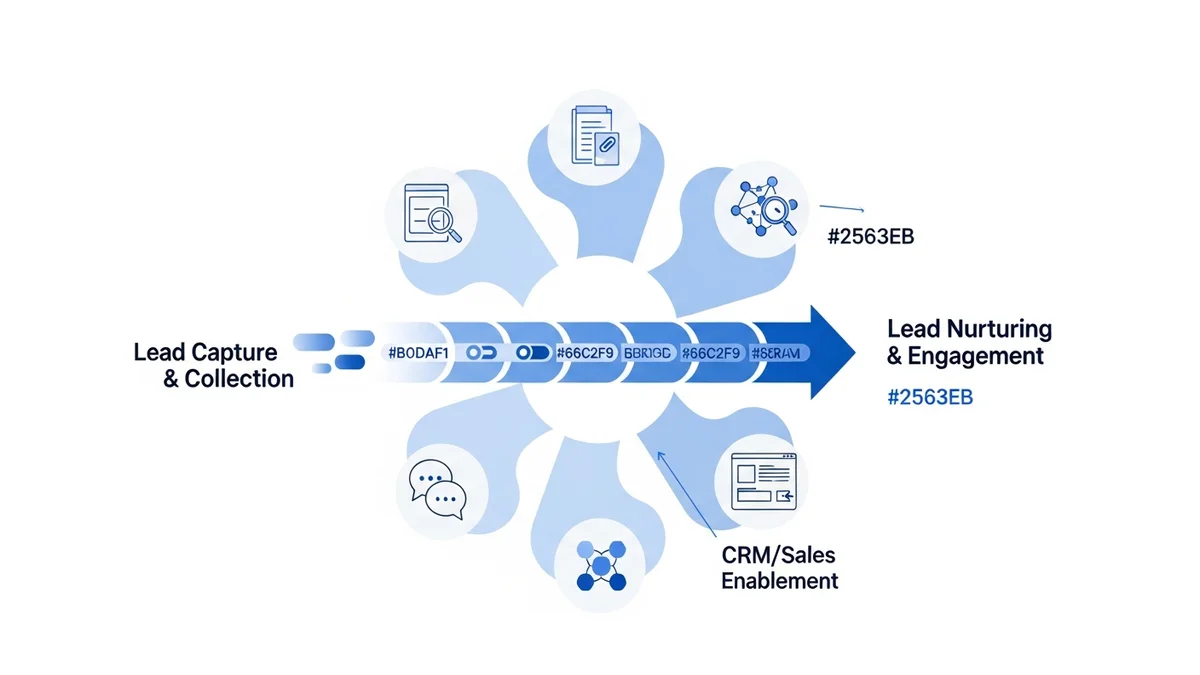
None of this means landing pages and conversion rate optimization are irrelevant. The 2% who do convert through forms represent real pipeline, and optimizing that conversion surface still delivers meaningful returns. Tools like HubSpot Marketing Hub sit at the intersection of these approaches — managing both the nurture flows for identified visitors and the conversion optimization for active form-fillers within a unified platform. The advantage of having both signals in the same system is that you can identify when an anonymous visitor who previously showed intent finally converts, connecting the full behavioral history to the lead record.
The Tool Stack That Actually Supports This in 2026
The trends above aren't theoretical — they require specific tooling to execute. Here's how the category breaks down for teams building a modern B2B lead gen stack.
Intent and Visitor Identification Layer
This is the foundational layer that makes the 98% visible. Leadfeeder (now part of Dealfront) is one of the most established players here, with strong CRM integrations and reliable company matching. For teams that want enrichment baked into the same platform, Clearbit / HubSpot Breeze Intelligence layers firmographic enrichment directly onto identified visitor records, reducing the need for manual research before outreach.
Prospecting and Contact Data Layer
Once you know which companies are showing intent, you need accurate contact data to act on it. Apollo.io has become a dominant choice for growth-stage teams because it combines a large verified contact database with sequencing capabilities, reducing the number of point tools required. For enterprise teams with stricter compliance requirements — particularly in Europe — Cognism differentiates on GDPR compliance and telephone-verified mobile data, which matters when cold calling is still part of the outbound mix. ZoomInfo remains the highest-scale option for large enterprise teams that need breadth of data coverage above all else.
Conversion and Nurture Layer
The conversion layer — landing pages, forms, email nurture — is where behavioral signals get turned into pipeline. HubSpot Marketing Hub handles the full nurture workflow for most mid-market teams. For teams that need more sophisticated landing page optimization without the full HubSpot footprint, dedicated conversion platforms remain relevant for high-volume paid traffic campaigns where landing page performance directly affects cost per lead.
What B2B Teams Should Actually Do Differently in 2026
The research points to a clear priority stack for teams looking to modernize their lead generation approach this year:
First, instrument your website for intent. If you're not capturing company-level visit data, you're operating blind on the 98% of your traffic that isn't converting. This is the highest-leverage change most B2B teams can make right now, and the tooling is mature enough that implementation friction is low.
Second, connect intent signals to your outbound motion. Visitor identification data only creates value if it changes who your sales team calls and when. The operational change — routing real-time intent alerts to reps with behavioral context — is often more important than the technology itself.
Third, invest in demand generation before lead generation. Ungating more content, building genuine brand authority, and letting intent data do the qualification work produces better leads than aggressive gating of mediocre content. The sequence matters.
Fourth, treat LinkedIn as infrastructure, not a campaign channel. With 97% adoption among B2B marketers and usage shifting toward quality over volume, LinkedIn is no longer a channel you run experiments on — it's core to how buyers research and evaluate vendors. Consistent, valuable presence compounds over time in ways that campaign-style bursts don't.
The teams winning in B2B lead generation in 2026 aren't the ones spending the most. They're the ones with the clearest view into buyer behavior and the fastest motion from intent signal to relevant conversation. That combination — visibility plus speed plus relevance — is what the best tools and tactics in this guide are designed to enable.