
The State of AI Lead Generation in 2026: Why Everything Has Changed
If your lead generation strategy still revolves around gated PDFs, cold outreach blasts, and hoping the MQL math works out, you are operating with a 2019 playbook in a 2026 market. That gap is no longer a minor handicap — it is a structural disadvantage that compounds every quarter.
What has changed is not just the tooling. The underlying logic of how pipeline gets built has fundamentally shifted. AI has moved lead generation away from a volume game toward what analysts are now calling pipeline intelligence: the ability to identify the right accounts, at the right moment, with the right message — before a competitor even knows those accounts exist.
This guide breaks down the most important AI lead generation trends shaping 2026, what they mean in practice, and how to build a stack that actually drives revenue rather than just generating activity metrics your board will quietly ignore.
From Reactive Marketing to Predictive Revenue Operations
The most significant structural shift in 2026 is the replacement of reactive marketing with predictive revenue operations. For most of the last decade, lead generation was fundamentally reactive: you published content, ran ads, set up forms, and waited to see who showed up. AI has inverted that model entirely.
Predictive Analytics: No More Waiting for the Form Fill
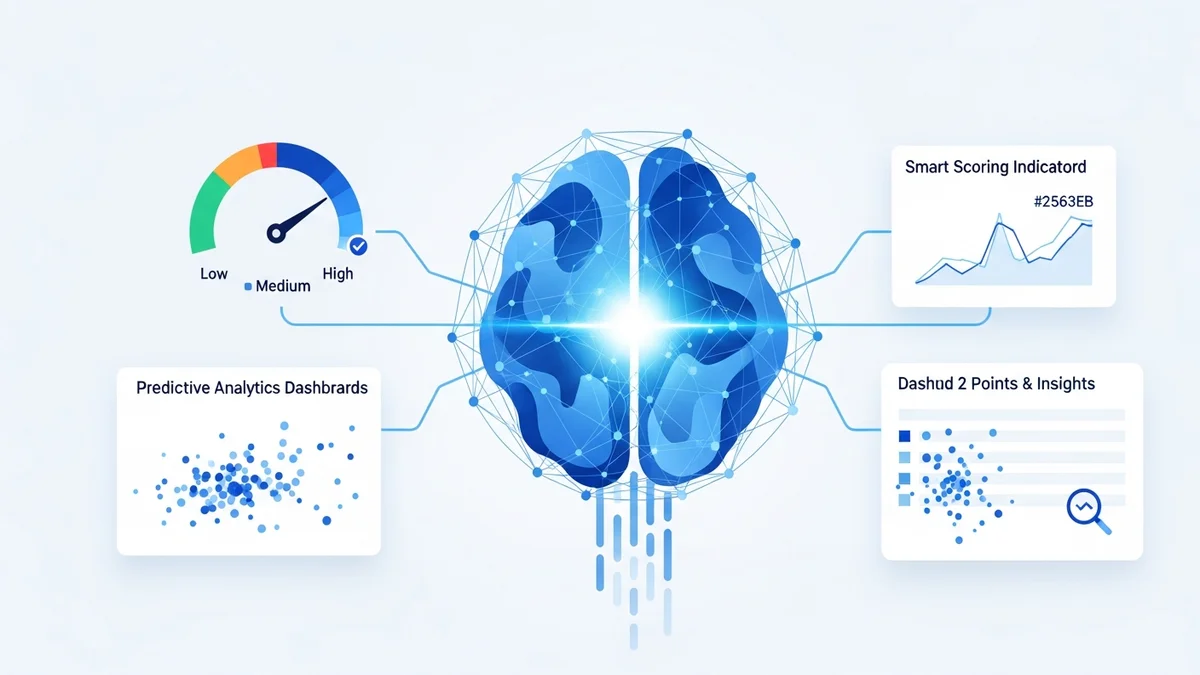
Modern AI platforms now analyze combinations of historical CRM data, behavioral signals, firmographic attributes, engagement patterns, and deal outcomes to predict which accounts are entering an active buying cycle — weeks before those accounts raise their hands. For B2B teams with sales cycles of 60 to 180 days, this predictive visibility is transformative for resource allocation.
Tools like ZoomInfo and Cognism have built predictive scoring layers directly into their prospecting databases, meaning sales teams can filter not just by firmographic fit but by buying readiness. This is not incremental improvement — it fundamentally changes how SDR teams prioritize their days.
Intent Data: The Signal Layer That Changes Everything
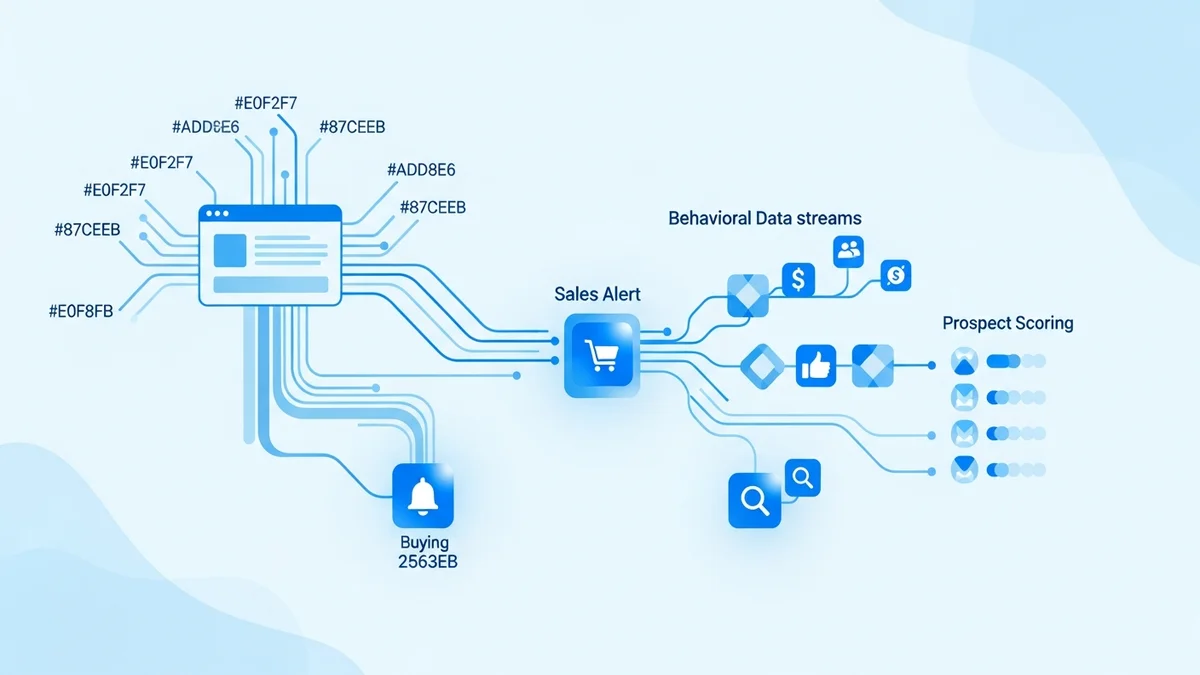
Intent data — the aggregated behavioral signals that indicate a company is actively researching a problem you solve — has matured from a niche capability into a baseline expectation for competitive B2B teams. In 2026, AI platforms ingest intent signals from third-party content networks, review sites, job postings, and web behavior to surface accounts that are in-market right now.
Leadfeeder (Dealfront) has built its entire product around this premise: identifying anonymous website visitors and matching them to company profiles so sales teams can act on intent signals that previously disappeared into a void. The difference between calling an account that just spent 20 minutes researching your category versus cold-calling from a static list is not marginal — it is the difference between a 2% connect rate and a 12% connect rate.
The Five AI Trends Redefining Lead Generation This Year
1. Hyper-Personalization at Scale
Personalization has been a buzzword for years, but AI has finally made genuine one-to-one personalization economically viable at scale. In 2026, top-performing teams are using AI to dynamically tailor outreach sequences, landing page copy, and lead nurture content based on individual account context — industry, tech stack, recent funding events, hiring signals, and behavioral history.
Apollo.io exemplifies this shift with AI-generated email sequences that pull in live account intelligence, allowing a single SDR to run highly contextual outreach across hundreds of accounts without the messages reading like mail-merge outputs. The quality ceiling for personalized outreach has risen dramatically, which means the floor for what prospects will tolerate has risen with it.
2. Automated Lead Qualification and Routing
Manual lead qualification is one of the most expensive inefficiencies in modern revenue operations, and AI is eliminating it. Intelligent routing systems now assess inbound leads in real time — scoring them against ICP criteria, enriching them with firmographic and technographic data, and routing them to the right rep or sequence without human intervention.
Newsletter
Get the latest SaaS reviews in your inbox
By subscribing, you agree to receive email updates. Unsubscribe any time. Privacy policy.
This automation matters because speed-to-lead is one of the highest-leverage variables in pipeline conversion. Studies consistently show that responding to an inbound lead within five minutes versus within 30 minutes produces dramatically different conversion outcomes. AI-powered routing removes the human bottleneck from that equation entirely.
3. Conversational AI and Intelligent Lead Capture
Static forms are losing ground to conversational capture flows — AI-driven interactions that qualify leads dynamically based on their responses, route them intelligently, and book meetings without human involvement. This is where landing page optimization tools are evolving rapidly.
Platforms like Unbounce now incorporate AI-powered Smart Traffic features that route visitors to the highest-converting variant automatically based on behavioral signals. Meanwhile, Instapage has leaned into personalization capabilities that adjust page content dynamically based on ad source, audience segment, and visitor behavior — a meaningful upgrade from the static A/B testing paradigm that dominated the previous five years.
4. CRM Enrichment and Data Quality Automation
Dirty CRM data is a silent pipeline killer. AI enrichment tools have made it practical to maintain high-quality, continuously updated contact and account records at a scale that was previously impossible with manual processes. Real-time enrichment ensures that the firmographic and contact data underlying your scoring models and outreach sequences stays accurate — critical when you are making resource allocation decisions based on that data.
Clearbit / HubSpot Breeze Intelligence has become a cornerstone of this category, providing real-time enrichment that feeds directly into HubSpot workflows and scoring models. The integration between enrichment and activation is where the real value lives — enriched data is only useful if it immediately triggers the right action.
5. Pipeline Analytics and Revenue Intelligence
The fifth major trend is the maturation of AI-driven pipeline analytics — moving beyond vanity metrics like MQL volume toward predictive models that forecast revenue outcomes, identify at-risk deals, and surface the specific interventions most likely to improve conversion at each stage.
HubSpot Marketing Hub has invested significantly in its AI-powered reporting layer, giving marketing teams visibility into which campaigns are actually influencing closed revenue — not just generating leads that disappear into the funnel. This attribution intelligence is what allows modern marketing teams to have credible ROI conversations with finance instead of defending CPL metrics that no one trusts.
Building an AI Lead Generation Stack in 2026: What Actually Works
The explosion of AI tools in the lead generation category has created a new problem: stack complexity without corresponding returns. Most teams do not need 12 AI tools. They need the right four or five, properly integrated, with clean data flowing between them.
The Core Stack Architecture
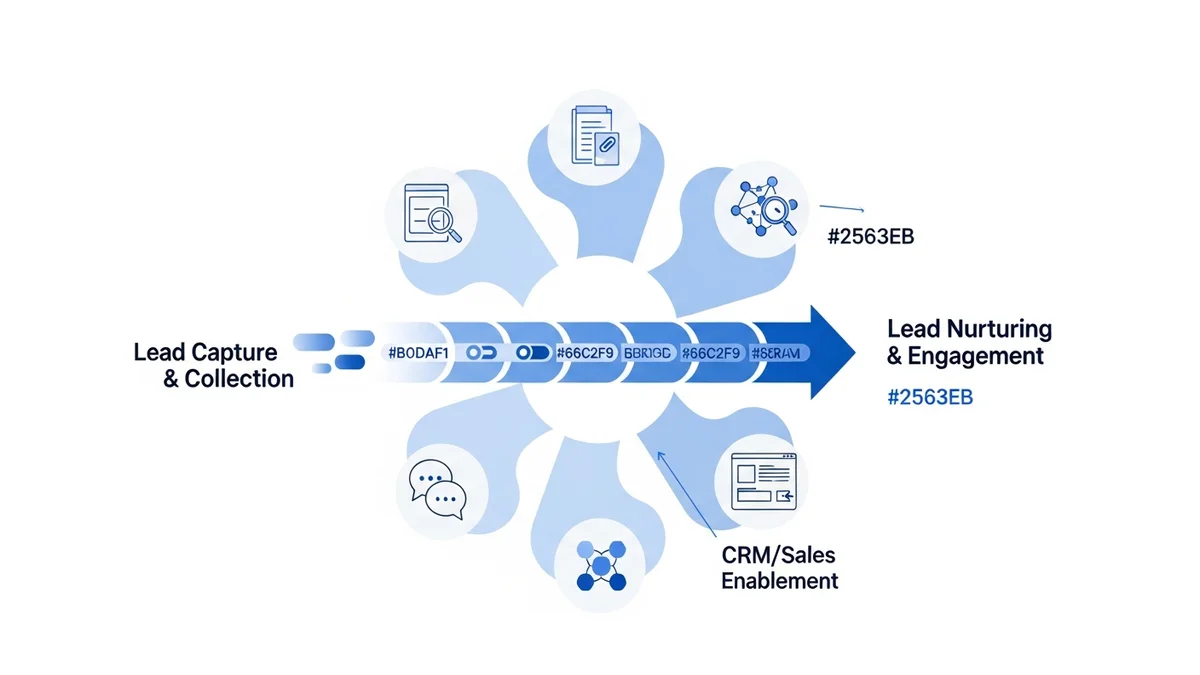
A high-performing 2026 AI lead generation stack typically operates across four functional layers: data and intelligence (who to target and when), capture and conversion (converting traffic into identified leads), engagement and outreach (activating those leads at scale), and measurement and optimization (understanding what is working).
| Stack Layer | Primary Function | Representative Tools | Key AI Capability |
|---|---|---|---|
| Data & Intelligence | ICP identification, intent monitoring, enrichment | ZoomInfo, Cognism, Leadfeeder | Predictive scoring, intent signal aggregation |
| Capture & Conversion | Landing pages, opt-in flows, form optimization | Unbounce, Instapage, OptinMonster | Smart traffic routing, behavioral personalization |
| Outreach & Engagement | Sequencing, personalization, multi-channel activation | Apollo.io, HubSpot Marketing Hub | AI-generated copy, automated sequencing |
| Measurement & Attribution | Pipeline analytics, revenue attribution, CRM hygiene | HubSpot Breeze Intelligence, Clearbit | Multi-touch attribution, predictive forecasting |
The Integration Imperative
The single most common implementation failure is building a stack where tools do not share data effectively. An intent signal from Leadfeeder that does not automatically trigger an Apollo sequence. An enrichment update in Clearbit that does not flow back to HubSpot scoring. These disconnects mean that the AI capabilities you paid for never actually fire at the right moment.
Before evaluating any new AI tool, the first question should be: does this integrate natively with our CRM, and does the data flow bi-directionally? If the answer requires a Zapier workaround or a custom API build, factor that cost into your evaluation — it is rarely trivial.
The Mistakes High-Performing Teams Are Actively Avoiding
Equally instructive to the trends themselves is what sophisticated revenue teams have stopped doing. Understanding these failure modes can save significant time and budget.
Chasing Lead Volume Instead of Pipeline Quality
The most persistent mistake in AI-assisted lead generation is using AI to generate more leads rather than better ones. Scaling a flawed ICP definition with AI tooling produces a larger volume of unqualified leads faster — which is worse than the original problem, not better. The teams seeing the strongest returns in 2026 have inverted their metrics: fewer leads, higher average contract value, shorter sales cycles, better close rates.
Underinvesting in Data Governance
AI models are only as good as the data they train on and operate against. Teams that have invested in CRM hygiene, consistent data entry standards, and regular enrichment cycles are getting dramatically more value from their AI tools than teams running the same software against stale, inconsistent data. This is not glamorous work, but it is foundational.
Deploying AI Without a Clear Strategy
AI tools do not create strategy — they amplify existing strategy. A team without a well-defined ICP, a clear value proposition, and a disciplined qualification process will not fix those problems with AI. They will surface them faster and at greater scale. The sequence matters: strategy first, tooling second.
What to Prioritize in the Next 90 Days
If you are evaluating where to invest in AI lead generation capabilities this year, the research consistently points toward three high-leverage starting points: intent data monitoring to identify in-market accounts earlier, predictive lead scoring to focus sales effort on the highest-probability opportunities, and AI-assisted outreach personalization to improve engagement rates on the accounts you do pursue.
None of these require a complete stack overhaul. Tools like Apollo.io stack multiple capabilities — contact database, intent signals, AI sequencing — into a single platform that lets smaller teams operate with the intelligence of a much larger operation. For teams earlier in their maturity curve, that kind of consolidation is often smarter than assembling five best-of-breed point solutions with integration overhead attached to each.
The underlying principle remains constant regardless of which tools you choose: use AI to focus human effort on the moments and accounts where it will have the highest impact. Volume is not a strategy. Intelligence is.