What Is Intercom?
Intercom is an all-in-one customer communication platform used by more than 650,000 websites worldwide. It combines live chat, AI-powered automation, a shared helpdesk, and proactive engagement tools into a single platform. While it started as a simple live chat widget, it has evolved into a full customer experience suite favored by SaaS companies, ecommerce brands, and B2B service providers that need to handle high conversation volumes across multiple channels simultaneously.
At its core, Intercom is built around three pillars: a shared helpdesk for managing support conversations, the Fin AI Agent for automated query resolution, and proactive outreach tools for engaging customers before they reach out. If you're evaluating tools for lead capture and qualification alongside customer support, Intercom sits at an interesting intersection — it handles both inbound leads and ongoing customer communication from the same inbox.
Core Features
Fin AI Agent
Fin is Intercom's flagship AI chatbot, trained on your own data sources including your knowledge base articles, website content, and uploaded documents. It handles incoming questions automatically and only escalates to a human agent when it can't resolve the query. The AI is trained using a no-code interface — you point it at your content, and it learns from it without any developer input required.
That said, users report that Fin occasionally gives unhelpful or off-target replies, particularly when questions fall outside the scope of the trained content. It works best when your knowledge base is well-structured and comprehensive. For lead generation purposes, Fin can qualify visitors by asking predefined questions and routing hot leads to sales reps in real time.
Workflow Automations (Flow Builder)
The visual Flow Builder lets you create custom chatbot sequences without writing code. You can build branching conversation trees that trigger based on visitor behavior, page URL, contact attributes, or time on site. Common use cases include lead qualification bots that capture name, email, and company size before routing to a sales rep, and support triage flows that sort tickets by topic before assigning them to the right team.
The builder also handles routing rules, CSAT survey triggers, and ticket escalation logic. Compared to basic live chat tools, the depth here is significant — you can build multi-step sequences that mimic what a front-line rep would do manually, which is especially useful for companies receiving hundreds of conversations per day.
Shared Inbox and Ticketing
All inbound conversations — from live chat, email, WhatsApp, Instagram, Facebook, and SMS — land in a single shared inbox. Agents can be assigned conversations manually or automatically via routing rules. Tickets can be tagged, prioritized, and linked to contact records. The inbox also supports collision detection, so two agents don't accidentally reply to the same conversation at the same time.
The ticketing system supports custom fields, internal notes, and SLA tracking. For sales teams using Intercom for lead generation, this means inbound inquiries from web visitors are treated the same as support tickets — all centralized, searchable, and reportable.
Proactive Support and Engagement Tools
Intercom's proactive tools let you reach out to users without waiting for them to start a conversation. These include:
- Product Tours: Step-by-step guided walkthroughs triggered by user actions, useful for onboarding or feature adoption campaigns
- Banners: Persistent or dismissible notification bars shown in-app or on-site, commonly used for announcements or promotions
- Carousels: Mobile-friendly multi-step message sequences for onboarding flows
- Push Notifications: For mobile app users, push messages can be sent based on behavioral triggers
- Series: Multi-message campaigns that send a sequence of emails, in-app messages, or push notifications over time
These tools make Intercom useful beyond pure support — they double as lightweight marketing automation for product-led growth companies. If you're looking at tools like OptinMonster for on-site engagement, Intercom's proactive suite covers some of the same ground, particularly for SaaS apps where the widget is already embedded.
Multi-Channel Messaging
Intercom supports conversations across websites, WhatsApp, Instagram Direct, Facebook Messenger, and SMS, all managed from the same inbox. The same chatbot flows and automations can be published across these channels without rebuilding them from scratch. This is particularly valuable for B2B companies that have prospects engaging via LinkedIn-driven social channels alongside their website.
Integrations and App Store
Intercom offers over 100 direct integrations including Salesforce, HubSpot, Slack, Stripe, Jira, Zendesk, and Shopify. The App Store allows you to install two-way syncs that push lead and conversation data into your CRM automatically. If your sales team uses HubSpot Marketing Hub to nurture leads, the native integration means Intercom-captured leads flow directly into HubSpot without manual exports.
Newsletter
Get the latest SaaS reviews in your inbox
By subscribing, you agree to receive email updates. Unsubscribe any time. Privacy policy.
Analytics and Reporting
Intercom's reporting covers conversation volume, response times, resolution rates, CSAT scores, team performance, and Fin AI resolution rates. You can segment reports by channel, team, or time period. For lead generation specifically, you can track how many conversations resulted in a contact being created or routed to sales — giving you a rough funnel view from first chat to qualified lead.
Pricing Plans
Intercom uses a per-seat pricing model billed monthly or annually. All plans include a 14-day free trial with no credit card required.
| Plan | Price (billed annually) | Key Inclusions |
|---|---|---|
| Essential | From $29/seat/month | Fin AI Agent, Messenger widget, shared inbox, basic ticketing, email support |
| Advanced | From $85/seat/month | Everything in Essential + Workflow automations, multi-channel (WhatsApp, Instagram, SMS), advanced reporting, multiple inboxes |
| Expert | From $132/seat/month | Everything in Advanced + Workload management, SSO, HIPAA-ready configuration, custom roles, real-time dashboards |
| Proactive Support Plus (add-on) | From $99/month | Product Tours, banners, carousels, push notifications, Series campaigns |
Note that proactive engagement features (Product Tours, banners, carousels) are not included in any base plan — they require the Proactive Support Plus add-on at $99/month minimum. For a team of three agents on the Advanced plan plus this add-on, you're looking at roughly $354/month billed annually. Costs scale quickly with headcount, which is a meaningful consideration for smaller teams.
Pros and Cons
Pros
- All-in-one coverage: Live chat, AI automation, ticketing, proactive campaigns, and multi-channel support in a single platform — no need to stitch together separate tools
- No-code flow builder: The visual workflow builder is genuinely easy to use, and even non-technical marketers can build multi-step lead qualification sequences
- Strong AI foundation: Fin AI Agent handles a meaningful share of repetitive queries, reducing ticket volume without requiring custom development
- Omnichannel inbox: WhatsApp, Instagram, Facebook, SMS, email, and in-app chat all converge in one place — agents don't context-switch between tools
- Deep integration ecosystem: 100+ native integrations including Salesforce, HubSpot, and Slack ensure Intercom fits into most existing stacks
- Proactive engagement breadth: Product tours, banners, and in-app carousels go well beyond what most chat tools offer, supporting product-led growth strategies
- Unlimited custom fields and tags: Contact enrichment and segmentation are flexible, supporting sophisticated lead scoring and routing logic
Cons
- Steep learning curve: The platform's feature depth is a double-edged sword — new users consistently report feeling overwhelmed by the navigation and configuration options
- Expensive for small teams: A solo operator or two-person support team paying $29–$85/seat/month is a significant overhead, especially before the proactive add-on
- Fin accuracy gaps: Users report that the AI agent sometimes misses the intent of questions, particularly nuanced or multi-part queries, leading to customer frustration
- Proactive tools are locked behind an add-on: Product Tours and banners cost an extra $99+/month on top of the base plan — not ideal if you assumed they were included
- Text formatting inconsistencies: Tables and rich text formatting in messages are sometimes rendered differently for recipients depending on the channel
Intercom vs. Top Competitors
| Feature | Intercom | Drift (Salesloft) | HubSpot Service Hub | Zendesk |
|---|---|---|---|---|
| Starting price | $29/seat/month | $2,500/month (billed annually) | $15/seat/month (Starter) | $19/seat/month (Suite Team) |
| AI chatbot | Fin AI Agent (native) | Conversational AI (sales-focused) | Breeze Copilot (add-on) | AI agents (add-on, usage-based) |
| Multi-channel inbox | Yes (WhatsApp, IG, SMS, FB) | Limited (web + email) | Yes (with Operations Hub) | Yes (extensive) |
| Proactive engagement | Yes (add-on, $99+/month) | Yes (native, sales-oriented) | Yes (via Marketing Hub) | Limited |
| Lead generation focus | Moderate — hybrid support/sales | Strong — built for B2B sales | Strong — CRM-native | Weak — support-first |
| Free trial | 14 days | Demo only | Free tier available | 14 days |
Against Drift, Intercom is significantly more accessible on price — Drift starts at $2,500/month, putting it out of reach for most SMBs. Intercom covers similar conversation routing and AI qualification capabilities at a fraction of the cost. However, Drift's ABM features and Salesforce integration depth are stronger for enterprise B2B teams focused purely on pipeline generation.
Against HubSpot Service Hub, Intercom wins on channel breadth and the quality of its standalone AI agent. HubSpot's advantage is its CRM-native architecture — if you're already using HubSpot Marketing Hub, the data continuity between marketing, sales, and service is difficult to replicate with Intercom alone.
Against Zendesk, Intercom offers more proactive engagement and a better live chat experience, while Zendesk has deeper ticket management, macro libraries, and enterprise SLA configuration. For pure support operations at scale, Zendesk edges ahead. For teams that blend sales and support in the same workflow, Intercom is the stronger choice.
If your lead generation stack is oriented around prospecting and data enrichment tools like Apollo.io or ZoomInfo, Intercom sits downstream — it handles inbound engagement after those tools surface prospects, rather than replacing them.
Who Should Use Intercom
Best Fit
- SaaS companies with 10–500 employees that need to handle both trial user support and inbound sales conversations in one tool
- Ecommerce brands running proactive campaigns (banners, product tours) alongside customer support on WhatsApp and Instagram
- B2B teams that receive inbound demo requests via chat and need automated qualification before human handoff
- Product-led growth companies that use in-app messaging and onboarding tours as core activation levers
Look Elsewhere If
- You're a solo operator or very small team — the per-seat model makes Intercom expensive relative to what you'll actually use
- Your primary need is outbound prospecting — tools like Apollo.io are built for outbound sequences; Intercom handles inbound only
- You need deep ticketing workflows with complex SLA tiers — Zendesk has a clear structural advantage here
- You're on a tight budget and primarily need landing page lead capture — Leadpages or Unbounce will get you more conversion-focused features per dollar
Verdict
Intercom earns its reputation as one of the most capable all-in-one customer communication tools available. The combination of Fin AI Agent, the visual workflow builder, omnichannel inbox, and proactive engagement features is genuinely hard to match at its price point, particularly for SaaS and ecommerce businesses.
The main friction points are real but manageable. The learning curve is steep initially, the proactive tools require an add-on that should arguably be included, and Fin's accuracy isn't perfect. For large teams with significant conversation volume, the per-seat costs compound quickly and warrant a careful ROI calculation before committing.
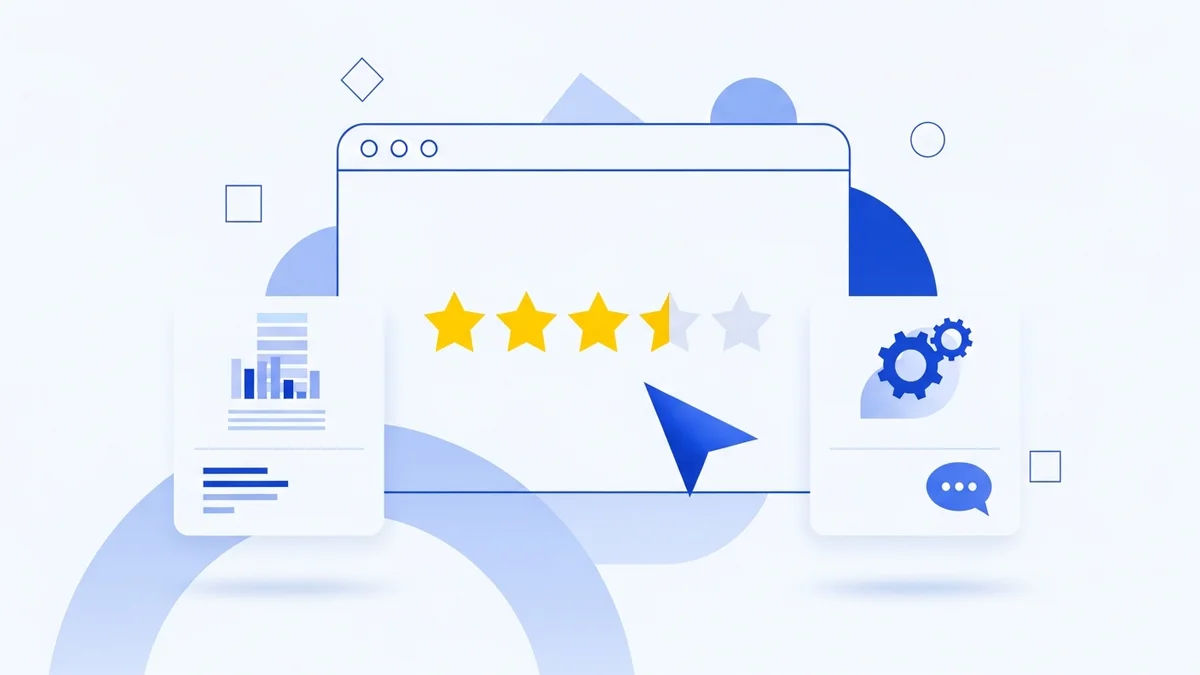
For a B2B company receiving 50–500 inbound conversations per month from a mix of prospects and customers, Intercom at the Advanced plan ($85/seat/month) is a strong choice. It reduces ticket resolution time through AI, captures and routes leads automatically, and keeps your entire team working from one inbox rather than juggling separate tools for chat, email, and social. If you need to convert more of that inbound traffic before it even hits the chat widget, pairing Intercom with a dedicated conversion tool like OptinMonster creates a more complete inbound funnel.
Rating: 4.5/5 — Excellent for SaaS and ecommerce teams that need scalable inbound conversation management with built-in AI. Pricing requires careful planning for teams under 5 seats.